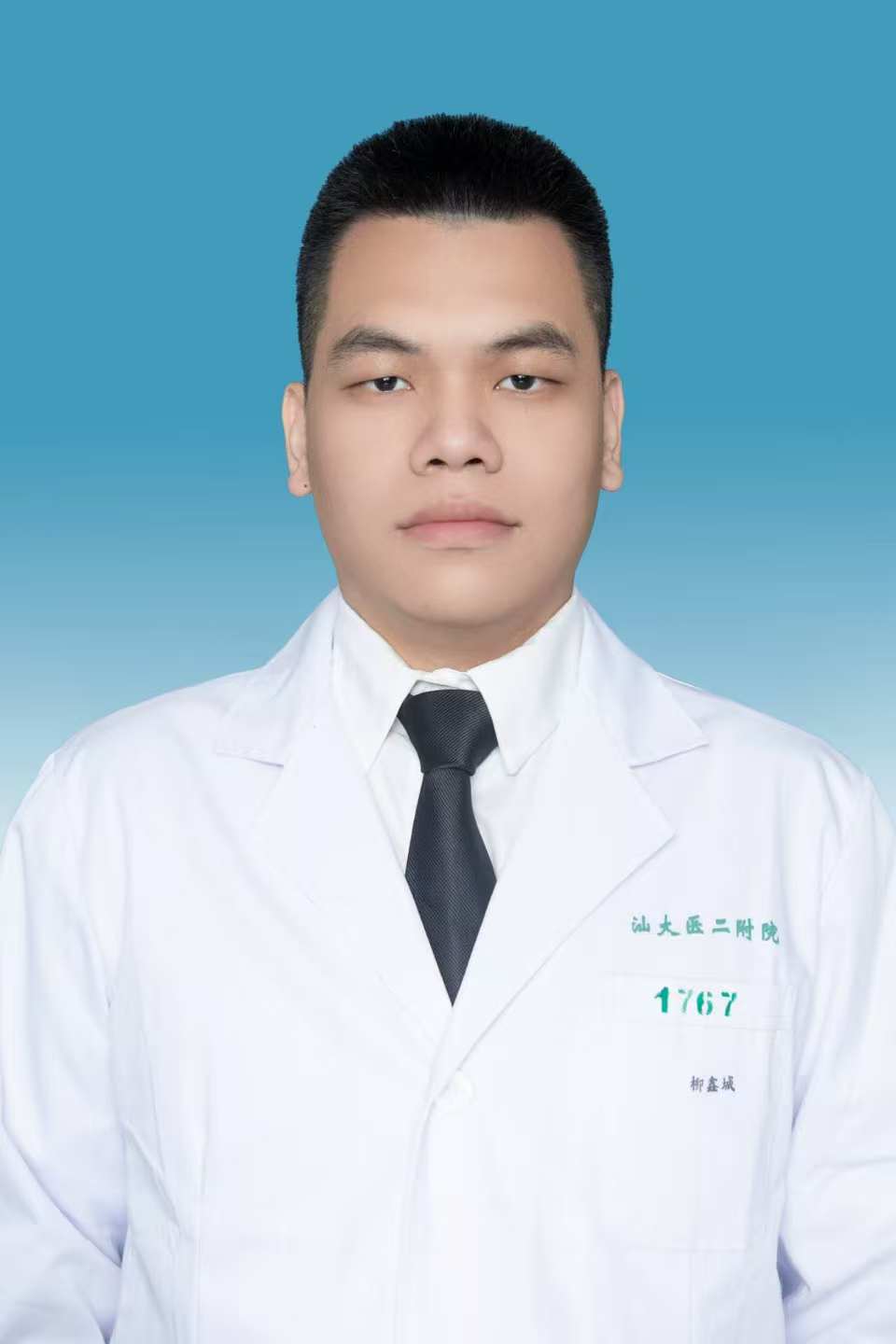
柳鑫城
副教授,副主任医师
8
论文
1
项目
姓名Name
柳鑫城
Xincheng Liu
性别Gender
男
Male
民族Ethnicity
汉
导师层次Mentor Level
硕士生导师
职称Title
副教授,副主任医师
Associate Professor, Associate Chief Physician
导师类型Mentor Type
学术型导师,专业型导师
最高学历Education
博士研究生
Doctor
最高学位Degree
博士研究生
Doctor
行政职务Position
无
None
联系邮箱Email
liuxch5@vip.qq.com
工作单位Workplace
汕头大学医学院第二附属医院
The Second Affiliated Hospital of Shantou University Medical College
招生专业Major
100201内科学(学术学位),105101内科学(专业学位)
个人简介
本科毕业于中山大学医学院临床医学专业,硕博期间师从我国著名药理学家、中山大学副校长颜光美教授,致力于肿瘤诱导分化领域及溶瘤病毒改造。喜欢多学科交叉、应用人工智能及计算机科学解决工作生活中的难题。目前工作于汕头大学医学院第二附属医院重症医学科。已发表2篇一作文章,承担一项国自然科学基金,参与四项国自然科学基金。已合作辅导发表论文十余篇,H指数11。目前课题组与广州中山大学合作紧密,视学生兴趣方向,可推荐至广州工作。
I earned my bachelor's degree in Clinical Medicine from Zhongshan School of Medicine, Sun Yat-sen University. During my master's and doctoral studies, I was supervised by Professor Yan Guangmei, a renowned pharmacologist in China and Vice President of Sun Yat-sen University. My research focuses on tumor differentiation induction and oncolytic virus modification. I am passionate about interdisciplinary research and applying artificial intelligence and computer science to tackle challenges in work and daily life. Currently, I work in the Department of Critical Care Medicine, the Second Affiliated Hospital of Shantou University Medical College.
I have published two first-author papers, presided over one National Natural Science Foundation project and participated in four others. I have co-supervised more than ten published papers and hold an H-index of 11. Our research group maintains close cooperation with Sun Yat-sen University in Guangzhou. Based on students' research interests, we can recommend job opportunities in Guangzhou.
研究方向
1、溶瘤病毒M1的改造及临床应用(与中山大学颜光美教授、朱文博教授课题组合作)
2、脓毒症的分型与诊疗。
国内外学术兼职
无
研究领域
1、溶瘤病毒M1的改造及临床应用(与中山大学颜光美教授、朱文博教授课题组合作)
2、脓毒症的分型与诊疗。
承担课题
主持1项:
1、转录因子DPF3调控恶性胶质瘤细胞诱导分化为神经元的分子机制(2023年国自然青年基金,82304568,主持)
参与4项:
1、国家自然科学基金委员会, 面上项目, 82172730, 新型溶瘤病毒M1选择性靶向肿瘤的泛癌机制研究, 2022-01-01 至 2025-12-31, 55万元, 在研, 参与
2、国家自然科学基金委员会, 面上项目, 82073771, 工程化细胞药物传递系统定向搭建隧道纳米管3D网络增效溶瘤病毒治疗腹腔转移性肿瘤的递送机制研究, 2021-01-01 至 2024-12-31, 55万元, 在研, 参与
3、国家自然科学基金委员会, 面上项目, 81973342, 细胞膜表面粘附分子Mxra8:新型溶瘤病毒M1的受体研究, 2020-01-01 至 2023-12-31, 55万元, 在研, 参与
4、国家自然科学基金委员会, 面上项目, 81872886, 糖酵解/脂肪酸β氧化代谢模式转变驱动恶性胶质母细胞瘤的分化及其表观遗传学机制研究, 2019-01-01 至 2022-12-31, 57万元, 资助期满, 参与
代表性论文
1.Liu X, Guo C, Leng T, et al. Differential regulation of H3K9/H3K14 acetylation by small molecules drives neuron-fate-induction of glioma cell[J]. Cell Death & Disease, 2023, 14(2): 142.(第一作者,IF =9.8 中科院小类二区)
2.Song D, Jia X, Liu X, et al. Identification of the receptor of oncolytic virus M1 as a therapeutic predictor for multiple solid tumors[J]. Signal transduction and targeted therapy, 2022, 7(1): 100.【共一第三作者,IF=38.8,中科院小类一区】
3.Gu J, Wang J, Liu X, et al. IL-6 derived from therapy-induced senescence facilitates the glycolytic phenotype in glioblastoma cells[J]. American Journal of Cancer Research, 2021, 11(2): 458.【共一第三作者,IF= 5.6,通讯作者:朱文博,中科院小类三区】
4.Negative regulation of miR‐1275 by H3K27me3 is critical for glial induction of glioblastoma cells[J]. Molecular Oncology, 2019, 13(7).【第三作者,IF=7.399,中科院小类二区】
5.Liu Y , Cai J , Liu W , et al. Intravenous injection of the oncolytic virus M1 awakens antitumor T cells and overcomes resistance to checkpoint blockade[J]. Cell Death & Disease, 2020, 11(12).【第四作者,IF= 7.05,中科院小类二区】
6.Tumors driven by RAS signaling harbor a natural vulnerability to oncolytic virus M1[J]. Molecular Oncology.【第五作者,IF=7.399,中科院小类二区】
7.Cai J , Zhu W , Lin Y , et al. Lonidamine potentiates the oncolytic efficiency of M1 virus independent of hexokinase 2 but via inhibition of antiviral immunity[J]. Cancer Cell International, 2020, 20(1).【第四作者,IF= 4.415,中科院小类三区】
8.Ying L , Ke L C , Wbz D , et al. Suppression of CCDC6 sensitizes tumor to oncolytic virus M1[J]. Neoplasia, 2021, 23( 1):158-168.【第六作者,IF= 6.275,中科院小类二区】
代表性著作
无
教学获奖
无
个人荣誉
无
科研获奖
无
其他成果
无